Unknown's avatar

Illogical (part one)

I don’t know what to call this besides illogical:

  • The cost of a college education has been increasing more each year than the cost of living has.
  • Wages, particularly in the last few years, have not been keeping up with the increasing cost of living.
  • Therefore wages are falling way behind tuition inflation.
  • A college degree is becoming more essential to employment every decade, but the process of earning it seems to be teaching graduates less and less applicable knowledge.
  • A rule of thumb generally preached to prospective college students who need student loans is that they should borrow a total of no more than their annual starting salary after graduation.
  • So many college freshmen don’t actually know what they’ll be doing after graduation. But architecture students do.
  • So many college students have no idea how much they’ll be making after graduation. But architecture students can find this out pretty easily.
  • The 2013 AIA Compensation Report came out last month. Click here for an article about it, that includes some of the data.

What do entry-level architecture graduates make? I’m going to spell out some of that data from the report.

  • Nationwide, mean (average) compensation for an “Intern 1” position is $40,000. (“Intern 1” is a person who has graduated from architecture school, works full-time in an architecture firm, and is on the path towards licensure.)
  • Compensation for these new grads a little higher in some places. (In the Mid Atlantic Region it’s $41,800.)
  • And it’s a lot lower in some places. (In the East South Central Region, it’s $34,800.)
  • Remember – these numbers are just averages.
  • According to the rule of thumb, architecture students should borrow a total of no more than $40,000 in student loans, since they’re likely to make no more than $40,000 in their first year after school.

So, as I wrote on a forum recently, if you have to borrow money to go to school, keep these things in mind:

  • To get a professional degree (a BArch or an MArch) in architecture, school takes 5 or 6 years.
  • My alma mater’s current tuition is over $44,000 per year, not including room and board. My alma mater has a 5-year professional degree (a BArch).
  • Tuition alone for the state university in my state is over $10,000 per year, and you’d have to go for a total of 6 years to get a professional degree (4-year degree plus a 2-year MArch).
  • In most states, you need a professional degree if you want to be able to pursue licensure.
  • A growing number of architecture firms won’t even hire you unless you have a professional degree. (According to the AIA report referenced above, 20 percent of firms do not hire employees without a professional degree in architecture, up from 15 percent in 2011.)
  • You might need to borrow money for room and board, or for living expenses, in addition to tuition. If, while in school, you have a job, or live with parents or a spouse who supports you and pays for living expenses, and you get in-state tuition in my state, you’ll likely borrow something like $60,000.
  • If you go to my alma mater, don’t have a job, live on campus, and borrow money for tuition, room and board, you might need something like $285,000, unless you get “gift aid” from the university, in which case you might be borrowing “only” $142,000.
  • You’d never make $142,000 in your field as an architecture grad in the first few years after school.
  • In fact, that figure is close to the mean of what architects top out at right now.
  • The mean salary for CEOs of architecture firms in New England (the highest-paid region in the country for architecture CEOs) is $151,500. That is the highest number on the whole survey.
  • And nobody gets to that compensation level very fast – the mean compensation for “Intern 3” is $49,200. (“Intern 3” is a person who has graduated from architecture school, has three to six years experience, works full-time in an architecture firm, and is working towards licensure.)

If you have to borrow money to go to architecture school, the math just doesn’t work out.

  • Check it out for yourself – figure out how much tuition and room and board and fees and books and supplies cost at the schools you’re looking at. Then figure out what you might make in each of your first few years in an architecture firm in the city you want to be in. (To do this, go to the local AIA office and ask to look at the latest compensation survey results for that city. Do not search online for “architect salary;” the internet thinks you mean “software architect,” or some other IT field, and they make more. ) Then use an online calculator to see if it’ll work. Here’s one.

Something’s gotta give. So what can be changed? I have some thoughts that will be in part two, later this week.

Unknown's avatar

“The Strangest Way To Do Business”

Purchasing for construction projects isn’t like purchasing in our personal lives.

When we buy things in our personal lives, we go to a store, or go online, find exactly what we want, and buy it. Sometimes we ask someone else to get something for us. The very particular among us might attach a photo of exactly what we want when we send the email or text message request for the item. (To end up with the right container of anchovies, I might need to send my husband a photo of the jar.)

On construction projects, the architect finds out from the owner the general idea of what is required, then the architect, through the drawings and specifications, tells the general contractor exactly what to provide. OK, so this is complicated, but it still makes sense.

What happens next is where it gets weird…

The bidding general contractors solicit bids from subcontractors and vendors, each of whom is a specialist in his or her area. These are the people who read the documents and actually provide what the drawings and specifications require, and the general contractor who is awarded the project coordinates all of that work. These bidders may submit bids on the specified items, or may submit substitution requests, requesting that different products be approved by the architect.

Last week I was talking with a product rep at my CSI Chapter meeting about specifications for toilet partitions and lockers. The rep represents several different manufacturers. She currently has someone working with her who is new to the construction industry.

The new person looks at specifications for all projects that have just hit the street, to see if the specs include manufacturers they represent, or products that they might be able to meet the spec for, even if their manufacturers aren’t specifically listed. If their manufacturers aren’t listed, but they can meet the spec, the product rep will prepare a substitution request and submit it to the general contractor for him to submit to the architect, to see if they can get approved, and therefore be able to provide a bid.

The new employee described this process as “the strangest way to do business.” It is very odd, from a manufacturer’s or distributor’s point of view. The building owner, through the architect, asks for something specific, or maybe says “provide one of these 3” or maybe says “provide this, or something equal.” Then the manufacturer, distributor, or subcontractor goes through a process which looks a bit like begging to be allowed to play, too.

This isn’t actually that strange when the documents are clear.

The intent, and the outcome, of this process is that the design team can research one, two, or three products that will work on the project, indicate the important characteristics of the desired products, and allow competitive bidding through the substitution request and review process. This can result in a fair price for the owner, set up clear quality requirements so that bidding is fair for contractors, and allow the open competition that is usually required for government projects.1

But when the specifications are poorly written, this process actually IS one of the strangest, most inefficient, ridiculous ways to do business.

Sometimes subs and vendors have to play a guessing game, trying to figure out exactly what products are desired or allowed. Sometimes, bad specifications call for discontinued products, or worse, products by manufacturers who went out of business years ago. Sometimes, bad specifications are uncompleted master specification sections, with multiple options (that were intended to be deleted) indicated. (That looks something like this, with brackets and bold text:  Toilet-Enclosure Style: [Overhead braced] [Floor anchored] [Ceiling hung] [Floor and ceiling anchored].) Sometimes, bad specifications indicate a mix-and-match monster of a product that isn’t available, such as when “manufacturer’s standard polymer integral hinge” is specified for steel toilet compartment doors. (A sub knows the architect doesn’t really want polymer “integral” hinges for a steel door, because there is no such animal, but has no idea if the architect wants hinges that are stainless steel, aluminum, or “chrome-plated zamac.”)

Now, toilet compartments aren’t a huge percentage of construction cost for a whole building. But it’s an easy example. Imagine the confusion and wasted time when errors like this are made in the masonry spec section for a large brick building with CMU backup. For a project that’s bid by several general contractors, there could easily be 3 bidding subs for each of 3 bidding generals – so there could be 9 confused subs who have gone back to their 3 generals, who have gone back to the architect (another confused person) who goes back to whomever wrote the spec. And the person who wrote the spec now has to do what should have been done in the first place – figure out exactly what is needed, and clearly communicate that to the bidders. It’s easier for the specifier to do it right the first time, but it’s not only his or her own time that’s wasted – there could easily be more than a dozen additional people who are all trying to figure out the same thing.

That really is the strangest way to do business – trying to figure out something that lots of other people are also trying to figure out, merely in order to submit an accurate bid that would allow them to deliver what is required, at a fair price, and to make a fair profit.

Bidding for, and building, a construction project shouldn’t be a guessing game in which one tries to interpret documents that make no sense. When the documents are good, and clearly indicate the requirements for a constructible building, bidding goes more smoothly because there are fewer addenda, bids are closer to each other (demonstrating that the owner is getting a fair price), and construction goes more smoothly. Less time is wasted on the design team side and on the construction team side. The design team should get it all figured out in the design phases; changes made in the design phases cost much less than changes made in the construction phase. When the documents are good, both the design team and the construction team have more profit, and the owner has fewer change orders to deal with and pay for.

Isn’t this what we all want?

___________________________________________________________________________________________

Notes:

  1. For further reading on the substitution process, check out this great article by Ron Geren, “Substitutions: Flexibility within Limits” http://www.specsandcodes.com/Articles/Keynotes%20No.%208%20-%20Substitutions.pdf and the article he cites, “Prior Approval, A Specification System,” by H. Maynard Blumer https://lizosullivanaia.com/wp-content/uploads/2013/06/prior-approval-a-specification-system2.pdf  As Ron Geren points out, the Prior Approval System was the first formalized substitution procedure. (Yes, we’ve had a formal substitution procedure for decades now. I know, this is news to many.)
Unknown's avatar

Avalanches & Construction Project Teamwork

The Colorado mountains were host to a tragedy last month, on April 20th. Six skiers and snowboarders triggered an avalanche that killed five of them.

These guys were experienced backcountry travelers; their collective knowledge and experience made them a group who knew, better than most, what they were getting into, and how to avoid triggering an avalanche. But that didn’t actually translate into making them a great team.

Weird group dynamics often contribute to disaster. The larger the group, the less likely people are to speak up with dissenting opinions. An interesting study on data from human-triggered avalanches supports this statement in the context of avalanche danger.

The Denver Post had a great article on this tragedy, and how the “pack mentality” contributed to it.

From the Post article:

In 2004, avalanche researcher Ian McCammon released a seminal study “Heuristic Traps in Recreational Avalanche Accidents: Evidence and Implications,” in which he looked at 715 U.S. avalanche accidents from 1972 to 2003. The study found that people traveling alone and parties of six to 10 exposed themselves to significantly more hazard than groups of two, three or four.

McCammon identified six human factors in more than 95 percent of the accidents and concluded that they have the power to lure almost anyone into thinking an avalanche slope is safe. They are:

• Familiarity, which McCammon said “relies on our past actions to guide our behavior in familiar settings.”

• Consistency, which sees people sticking with original assumptions and ignoring new information about potential hazards.

• Acceptance, described by McCammon as “the tendency to engage in activities that we think will get us noticed or accepted.”

• The Expert Halo, which sees group members ascribing avalanche safety skills to a perceived expert, who may lead the group without those skills.

• Social Facilitation, which sees groups tending toward riskier decisions.

• Scarcity, or the “powder fever,” that can overwhelm backcountry travelers hunting for deep, untracked snow.

Many of these cues were clearly evident April 20 when the six skiers and snowboarders were buried in the 800-foot wide avalanche that slid 600 vertical feet off the north-facing flank of Mount Sniktau.

Hey, architects, does any of this sound familiar to you? Working on a team with an owner who listens to the contractor more than to you, because she’s worked with that contractor before, even though you have to stamp the drawings? Keep working on what you designed with an original budget in mind, although the budget has changed? Don’t want to rock the boat because you hope to work with this owner again in the future? Let the contractor select a roofing assembly because you perceive him to be more of an expert on roofs, even though you don’t actually know that he is? Willing to specify a completely new untested product because someone else on the team recommended it? Willing to take on a client, or work with a contractor, who has proven unreliable in the past, just because there’s not much work to be had?

From the study: “In hindsight, the danger was often obvious before these accidents happened, and so people struggle to explain how intelligent people with avalanche training could have seen the hazard, looked straight at it, and behaved as if it wasn’t there.”

We can’t do this design and construction thing alone. But when teams get too big, it’s human nature to speak up less. Architects, keep this human tendency in mind as more and more projects become contractor-led. Don’t forget that, although your life isn’t in danger due to not speaking up when you know better, as it is in the mountain backcountry, your reputation and liability are. You may be part of a pack, but you’re the team member who stamps those construction documents. You’re responsible for their content, no matter who contributed to them. You don’t have to go along with the pack on everything.

Unknown's avatar

Earth Day Thoughts on Green Building

There’s an apartment building under construction near my office. The building’s marketing materials tout “Green Features” such as energy-efficient windows, low-e glazing, and energy-efficient lighting. That’s good, that’s all good.

But for some unknown reason, the juncture of the building wrap and those energy-efficient windows has been constructed using an inexpensive and outdated technique that does not produce an air-tight seal. In other words, those window units themselves may be energy-efficient, but the parts of the building enclosure that include those windows are likely to let hot air in during the summer and let warm air out during the winter. Not energy-efficient.

So, here’s some stuff I’ve said before, but am saying again:

Construction industry professionals cannot become “green skilled” without first becoming generally skilled. Being generally experienced in one’s field is a prerequisite to being “green” experienced.

A person without considerable experience in general architecture, engineering, or construction cannot be an effective “green skilled” employee for an architecture, engineering, or construction firm.

“Green” design and construction skills are icing on a cake made up of plain old experience and hard work. That icing cannot stand up by itself. You can’t just learn “green” design and construction skills and not bother with general design and construction skills.   

Without an understanding of basic building technology, we can’t contribute much to green building initiatives.

Just as the IgCC (International Green Construction Code) is an overlay to the other ICC codes (such as the International Building Code), green building technology does not replace, but enhances, basic building technology.

A building that has green features such as energy-efficient windows, but that does not meet current standards for basic construction of the building envelope, is not a green building.

Yes, I contacted someone who might be able to do something about that weird window/building wrap juncture. He confirmed that it’s weird – informed me that it’s outdated, and also informed me that that installation is likely to void the building wrap’s warranty. I hope it can be fixed. I really, really care about buildings.

Unknown's avatar

Diagnostic Icicles

Icicles indicate paths of water flow on buildings, and sometimes can alert us to problems. Water may be the biggest enemy of buildings; even tiny amounts of water can destroy buildings over time. Water can wear away the earth near a foundation and cause structural problems, it can rot away wood framing, and it can cause mold damage or deterioration to finishes if it gets inside a building.

icicles upper roof

The icicles on the roof in the photo above tell us that the roof has no gutter. That’s probably fine; it’s an upper level roof, and water flows right off it onto the lower roof. The lower roof has a gutter and downspout, so the water d0es flow away from the building. (Or it will, after the ice melts.)

icicle gutter hole

The photo above shows an icicle where we shouldn’t have one – descending from that rust spot we shouldn’t have. There’s a hole in this gutter. If you see an icicle coming from the middle of the bottom of your gutter, you probably have a hole in your gutter, and you should consider replacement. Water dripping out of this hole could travel along the outside of the gutter, get between the fascia and gutter, and cause rot.

icicle roof leak

The weird icicles above are telling us about several problems on the garage in the photo. My kids asked why the icicles are rusty. I think the water that formed them was just dirty water, but it’s possible that it was rusty water. Those icicles coming down on the face of the garage door indicate that the roof is not keeping water out of the building. The icicles descending from the face of the wall above the door indicate that the roof isn’t flashed into the gutter. The icicles descending from the gutter indicate that the gutter is, well, broken. I should probably mention these things to the homeowner, because this isn’t the first season we’ve seen these rusty icicles. (Homeowners, don’t put off fixing things like this!)

icicle April Colorado

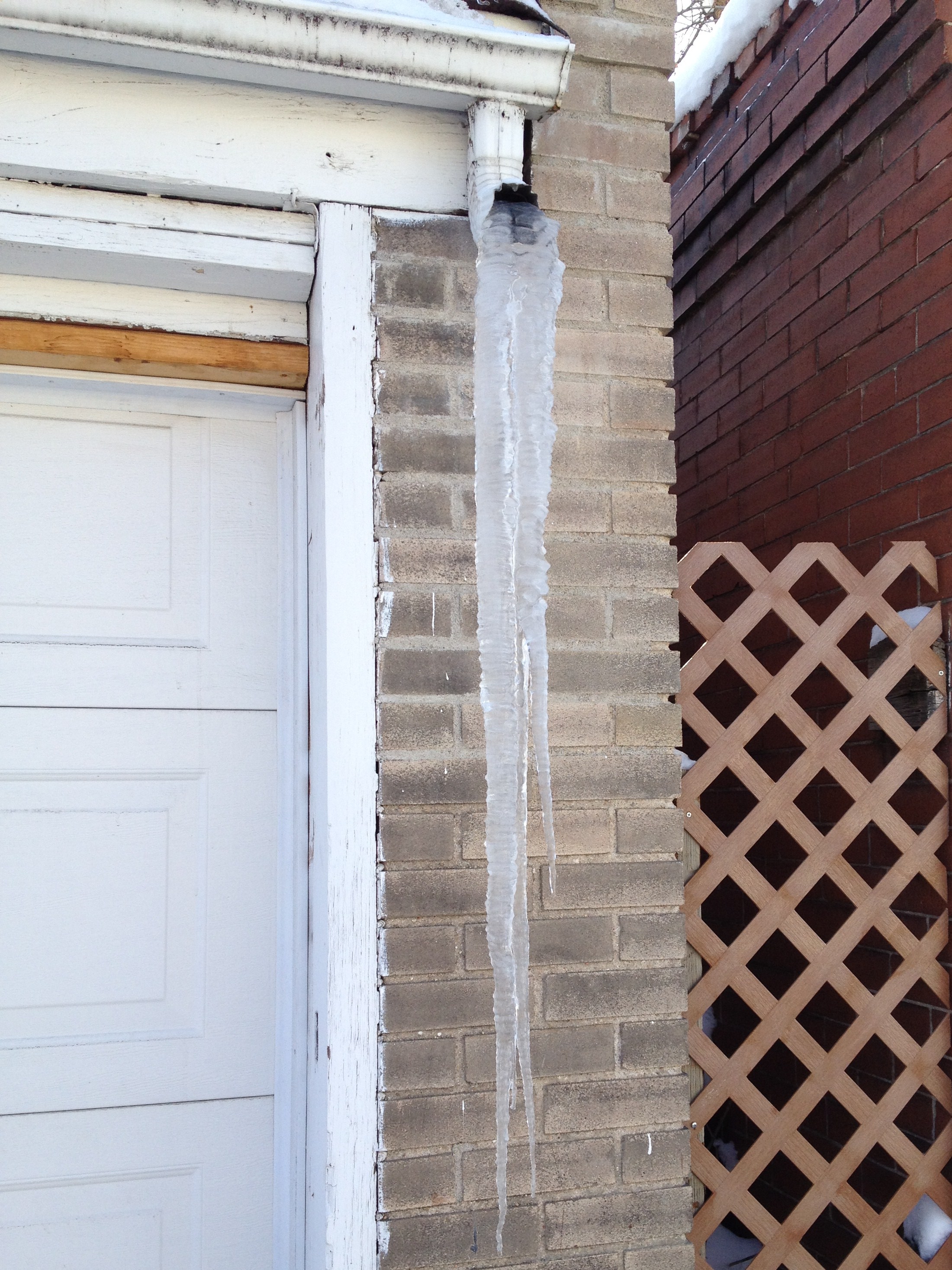
The icicle in the photo above is a fairly normal sight. If you see this, you might be in Colorado in April. If you live in a place that gets snow but no icicles, it means you live under perpetually cloudy skies, and that is sad.

Unknown's avatar

What Do Architects NOT Do?

Sometimes I tell people I’m a Renaissance Man. (Since I am female, this statement often momentarily confuses people.1) I mean that I am interested in, am capable of, and dabble in, a wide variety of pursuits.

Many, many architects could have taken career paths other than architecture. Our brains work mathematically, scientifically, and artistically. I am an architect, but while I am doing some of the other things I enjoy (making a gorgeous cake, managing my family’s investments, repairing a threshold in my home, carving a jack-o-lantern), I’m not practicing architecture.

Some practicing architects are builders as well as architects. Some practicing architects are also developers. But while they’re doing general contracting or real estate development, they’re still architects, but they are not practicing architecture. Construction, development, and architecture all require different agreements with clients and different liability insurance policies, even within design-build firms.

A bit over a week ago, I read a blog post that I can’t stop thinking about: “Being a Professional Architect is about much more than just designing nice buildings.” This post is on the blog of Build, LLC, a Seattle company that offers architecture and construction services. It was written to outline “a common code of conduct that all professions should abide by.”

The post was inspired by a community news blog post account of a designer in Seattle who declared bankruptcy and “walked away from more than $10 million in debt…” Ten million dollars doesn’t sound like an amount of debt that a small architecture firm could easily rack up, right?

The community news blog post keeps referring to the “architect,” and mentions that the “architecture firm imploded.” But it appears as if it was a development company that failed, and the guy isn’t actually an architect. (Yes, he designs buildings, but he isn’t a licensed architect.)

I’ve written about protection of the title “Architect” before.2 And I’ve written about a news writer’s obligation to use appropriate titles to refer to different types of design professionals.3 This situation is a good example of why I think the title should be protected – some of the comments on both posts are about this guy giving all architects a bad name.

This shouldn’t be happening; this designer’s actions shouldn’t be giving architects a bad name, because what he was doing that caused problems wasn’t actually the practice of architecture, and he isn’t actually an architect.

Financing the construction of buildings is not part of practicing architecture. Practicing architecture does not include constructing buildings.4 Yes, people who practice architecture sometimes do these things, but they are not doing these things at the same time that they’re practicing architecture. Everyone should be ethical in his or her work, but in practicing different types of work, we have completely different obligations to our clients and to the public.

Some consumers actually have no idea what an architect does. Architects themselves should not muddy this issue further. Practicing architecture as a profession is all about designing buildings. An architect discusses a project’s needs with the client, and based on those criteria and other requirements such as building codes, the architect designs, and prepares construction documents for, the building. The architect observes the construction of the building to verify that the building is being constructed in general conformance with the construction documents.

Mixing up the roles of architect, contractor and developer misleads consumers, and might be giving all architects a bad name.

Architects love being architects. But let’s be clear with clients and with the public that when we’re not actually practicing architecture, we’re not working as architects.

_____________________________________________________________________________________

Notes:

  1. “Renaissance Woman” doesn’t conjure up images of someone engaged in artistic or intellectual or scientific pursuits…  I just think of peaceful women sitting or lying down, posing for paintings.
  2. Recent posts of mine about protection of the title “Architect”: “’Sunset Review’ of Licensure for Architects”:  and “Really?!? ‘Who Cares Who’s a Licensed Architect?’”
  3. Post of mine about obligation of a journalist to use the correct title:  “Perpetuating a Misconception”  Note: In February 2013, AIA Colorado sent personalized letters to more than 50 editors and other journalists throughout the state educating them about the title “architect.”  I am thrilled.  http://www.aiacolorado.org/advocacy/about-architect.aspx
  4. Colorado law specifically excludes the “performance of the construction of buildings” from the definition of the “practice of architecture.” I suspect that other states do the same.
Unknown's avatar

Square Peg, Round Hole?

Does anyone else think it’s funny to see CSI MasterFormat 2004 section numbers rammed into the old CSI MasterFormat 1995 categories in construction estimates?

This is what most of the construction estimates that I see look like:

Division 1 General Requirements

01 50 00 Temporary Facilities and Controls

Division 2 Site Work

02 41 19 Selective Demolition

31 00 00 Earthwork

32 12 16 Asphalt Paving

Division 15 Mechanical

22 00 00 Plumbing

23 00 00 HVAC

Division 16 Electrical

26 00 00 Electrical

It looks funny to see section numbers that start with 22 put under Division number 15.  In the olden days, like maybe in 2003, the same info would have looked something like:

Division 1 General Requirements

01500 Temporary Facilities and Controls

01732 Selective Demolition

Division 2 Site Work

02300 Earthwork

02741 Asphalt Paving

Division 15 Mechanical

15000 Mechanical

Division 16 Electrical

16000 Electrical

See how nice and neat that looks with those first 2 numbers of each section matching the Division number of the category?  But then the spec writers went and started using different section numbers.  So there was some confusion, a period of transition…

But now, 9 years after MasterFormat 2004 was published, I’d expect this same info to be categorized like this:

Division 01 General Requirements

01 50 00 Temporary Facilities and Controls

Division 02 Existing Conditions

02 41 19 Selective Demolition

Division 22 Plumbing

22 00 00 Plumbing

Division 23 Heating Ventilating and Air Conditioning

23 00 00 HVAC

Division 26 Electrical

26 00 00 Electrical

Division 31 Earthwork

31 00 00 Earthwork

Division 32 Exterior Improvements

32 12 16 Asphalt Paving

But mostly, it’s not.  Those square pegs keep getting rammed into those round holes.


Unknown's avatar

Communication Breakdown?

Ever feel like you just aren’t being heard?  Ever feel like you aren’t sure exactly what someone’s talking about?  I do.

We hear a lot about how we work in “silos” today; we often work a little bit too independently from the rest of the people we’re supposed to be teaming with.  We make assumptions about the work of others (and then build our work from there); we sometimes make incorrect assumptions (and that affects our work negatively).

I love working independently, and I love working with other architects, but… the more I understand about the other people affected by my work, the better I can do my work.

When architects understand more about the point of view of a contractor, a subcontractor, a manufacturer, a supplier, or an owner, we can understand them better, we can make ourselves understood better, we can have a better team.  We can have a better construction process!

I often work on trying to learn more about the perspectives of others in the construction industry, but my first big step towards a better understanding was taking the CSI CDT exam.

The CDT (Construction Documents Technologist) exam covers a lot of information about preparing, understanding, and interpreting construction documents, and the roles of different groups in the construction process.

It was my first non-project-related introduction to the processes involved on the contractor side of the team.  There’s a lot I’d still like to learn, about the perspectives of the owner and the contractor during construction, but the CDT exam was a good start.

Learning more about where others are coming from can help you avoid communication breakdowns.

  • Final registration deadline for CSI Spring Certification Exams is February 28th.
  • Exams will be offered April 1 – 27, 2013, in the U.S. & Canada.
  • Learn more at http://csinet.org/certification
Unknown's avatar

What is “Building Technology”?

I often mention “building technology” in my blog posts.  I’ve realized that I’m using a term that many people aren’t familiar with.

When I use the term “building technology,” I am not talking about information technology within a building.  I am not talking about the software technologies used to design buildings.  I’m not talking about only high-performance buildings.  I am not talking about only new technologies in building systems.

I am talking about “technology” in terms of its most basic, stripped-down definition: “1. The practical application of knowledge especially in a particular area. 2. A manner of accomplishing a task especially using technical processes, methods, or knowledge.”  (Definition is from Merriam Webster.)

And I am talking about “building” as defined by Webster, too: “The art or business of assembling materials into a structure.”

When I use the term “building technology,” I mean knowledge of the technical processes and methods of assembling buildings.  Drawing proper construction details requires understanding building technology.  Identifying conflicts between the construction documents and the way things are being built on the job site requires understanding building technology.

Knowledge of building technology is an important part of the practice of architecture, but it’s an area in which many of today’s young architects are weak.  This is an area in which I was weak, until I started writing specs and suddenly had starting points for researching my questions (or rather, I suddenly realized what questions I ought to be asking).1

We hear a lot about high-performance new technologies in buildings, but somehow, we seem to have lost the basics of knowledge about detailing foundation, roof, and exterior wall assemblies that meet the minimum of the applicable code requirements.

Without an understanding of basic building technology, an architect cannot properly prepare construction documents for submittal to the authorities having jurisdiction for the purposes of obtaining a building permit.

From the 2009 International Building Code (which has been adopted by many municipalities), Chapter 1, 107.2.4 “Exterior Wall Envelope”:

“Construction documents for all buildings shall describe the exterior wall envelope in sufficient detail to determine compliance with this code. The construction documents shall provide details of the exterior wall envelope as required, including flashing, intersections with dissimilar materials, corners, end details, control joints, intersections at roof, eaves or parapets, means of drainage, water-resistive membrane and details around openings.” 

Without an understanding of basic building technology, an architect cannot demonstrate (to an owner, to a contractor, or to the building department) the constructability of a design.  A building is not made up of bits and pieces erected next to each other; a building is composed of interrelated systems and assemblies that work together to contribute to the building’s proper functioning.  If these components are not carefully selected, specified, and detailed, with the designer taking into account these components’ effects on all the other parts of the building, the completed building may not be able to protect its occupants from drafts, moisture intrusion, mold, condensation, cold, outside noise, or excessive heat.

When I worked as a project architect, I often put off the detailing of tricky conditions until the last possible time.  I know that some other architects do, too.  Drawing construction details is hard work.  There are other, more fun, more easily achieved, tasks that also must be accomplished before a set of construction documents is finished.  But waiting to detail the tough transitions is a problem – when we finally get into the meat of these things, sometimes we realize that the assumptions we’d carried all along were incorrect, and we need a taller parapet, or we need more rigid insulation in the cavity, or we need a building expansion joint.

This detailing work can be less tedious, less torturous, and less time-consuming when we have more knowledge and more understanding of these things.  We produce better construction documents, and help to get better buildings built, when we know more about building technology.

Without an understanding of basic building technology, we can’t contribute much to high-performance building initiatives, such as those by the Building Enclosure Technology and Environment Council (BETEC) of the National Institute of Building Sciences (NIBS), and the U.S. Department of Energy’s Energy Efficiency & Renewable Energy Building Technologies Program, the U.S. Green Building Council, and many cities and states.  Just as the IgCC (International Green Construction Code) is an overlay to the other ICC codes (such as the International Building Code), high-performance building technology does not replace, but enhances, basic building technology.

But… who’s teaching architects about basic building technology today?

Architecture school curricula have gotten heavier on design; architecture graduates are supposed to learn almost everything else they need to know during their internships.  But as more and more knowledgeable gray-haired architects retire, many of the mentors for interns and young architects know less about basic building technology than the mentors of the past.

CSI (the Construction Specifications Institute) recognizes this problem, and is currently exploring the concept of a Building Technology Education Program.  The task team for this program has been charged with formulating “the concept of a building technology education program for participants in the design/construction industry that will benefit the industry by raising the technical knowledge of the participants.”  I don’t think a program like this exists today, and I don’t think that any other organization is working on anything comprehensive like this proposed education program.2

This program is envisioned as being for everyone in the construction industry – not just for intern architects and emerging professionals.  (Architects, remember: we’re part of the construction industry.)  The more that everyone in the industry can understand the concept that all parts of a building are interrelated, and that a modification to one assembly may require modifications to other assemblies, the more effective all of us in the construction industry can be.

Notes:________________________________________________________________________________

  1. Here are some links to past blog posts of mine that discuss technical weakness in architects – including my own past technical weakness.  I have greatly increased my understanding of building technology – anyone can.
    1. https://lizosullivanaia.wordpress.com/2012/02/06/architects-take-back-the-reins/
    2. https://lizosullivanaia.wordpress.com/2012/05/30/the-fervor-of-a-convert-part-one/
    3. https://lizosullivanaia.wordpress.com/2012/05/31/the-fervor-of-a-convert-part-two/
  2. Here’s the roster of the Building Technology Education Program Task Team on the CSI website http://new.csinet.org/csi_services/committees.aspx.  (Scroll down to “FY 2013 Building Technology Education Task Team.”)  If you have suggestions for the team, please contact one of the members.
Unknown's avatar

Old Mansion, New Office

I’ve settled in to my new office.

At the beginning of January, I moved my office from a 1972 building in Cherry Creek to a 1920 building in Capitol Hill.  Although there’s so much to love about my new office, the gentle hot-water heating and the natural light are at the top of my list.  The loud 1970’s HVAC and fluorescent lights in the old office were wearing on me.

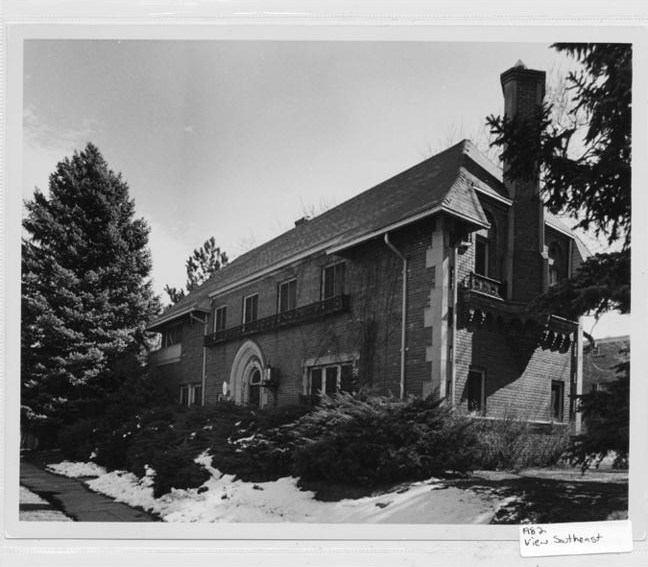
I’m now in the Historic Kistler-Rodriguez House.  Here’s an old photo, which I copied from the nomination form for the building’s historic designation.

Kistler-Rodriguez House old photo


Denver’s Capitol Hill has a number of large old mansions that are currently used as office buildings.  There’s an interesting reason for this.  Denver’s 1957 zoning code drastically “up-zoned” Capitol Hill, which at that time was covered with single-family houses, to residential high-rise zoning.

Capitol Hill’s proximity to downtown Denver makes its land valuable, so demolishing houses to make way for high-rises started to make a lot of economic sense.  But Denver’s citizens didn’t want all of its historic mansions destroyed, so an interesting exception was carved out in the zoning code to allow for designated Historic buildings in residential-zoned districts to be used for office use.

The highest and best use for these properties was suddenly less clear. Demolition to make way for more dense income-producing residential buildings was no longer necessary; with a few alterations, these buildings could generate more income per-square-foot as office buildings than they could as residential buildings.  This exception saved many historic buildings from destruction by allowing them to produce more income for their owners than residential use could, which de-incentivized their demolition.

Shortly after the photo above was taken in 1982, a “glass box” addition was added to the south side of the building.  It’s a pretty cool addition, and, to use a word favored among architects, a nice juxtaposition of 1920’s and 1980’s.

The Kistler-Rodriguez House, also known as the Dominican Republic Consulate, was designed by Jules J.B. Benedict, and was built in 1920. It was designated (entered into the National Register of Historic Places) in 1983.

I’ve often called the building the “Governor’s Park Dental” building, because my dentist has been the main tenant of the building for the last 30 years.

The Denver Public Library has more information on the building here, and here’s a link to the National Register Nomination Form that was submitted to the Department of the Interior.

Working on historic preservation in Denver is still important today. Among other things, Capitol Hill United Neighborhoods (CHUN) Historic Preservation Committee works on getting historic buildings designated as Historic.  To get involved, start by learning more, here.